Table of Contents
Introduction
The story of Hagia Sophia as a museum begins not with architecture, but with politics and transformation. For over a millennium, Hagia Sophia had embodied religious authority—first as the crowning jewel of Byzantine Christianity, then as the imperial mosque of the Ottomans.
But in 1935, it was redefined. Under the leadership of Mustafa Kemal Atatürk, founder of the Republic of Turkey, the sacred structure was secularized, stripped of its religious function, and opened to the world as a museum.
This shift wasn’t merely symbolic; it was an architectural declaration of a new national identity. By redefining Hagia Sophia, Turkey redefined itself.
From Empire to Republic: The End of the Ottoman Era
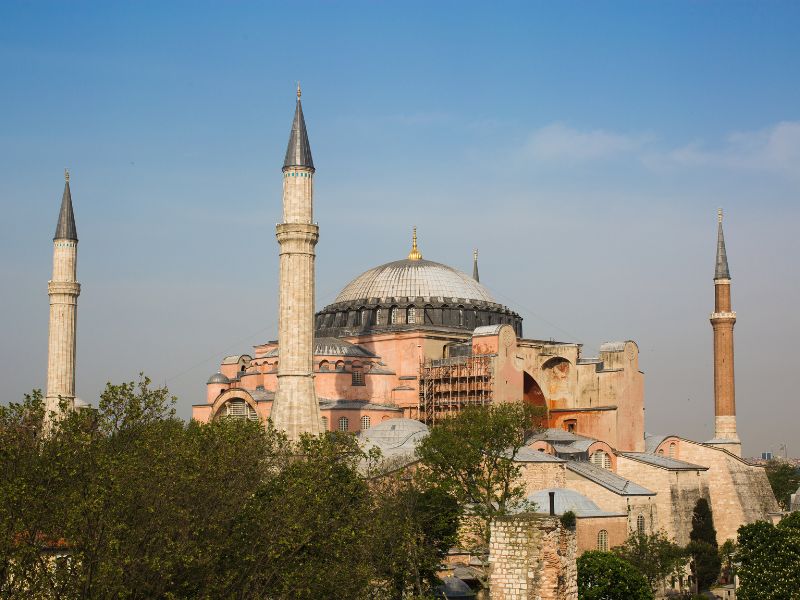
The early 20th century saw the collapse of the Ottoman Empire after military defeats and internal decline. Following World War I, Turkey stood at a crossroads. The Sultanate was abolished in 1922, and the following year, Atatürk proclaimed the Republic of Turkey. His reforms aimed to modernize the nation through secularization, Westernization, and cultural reorientation.
In this climate of radical change, Hagia Sophia stood as both a relic of empire and a canvas for renewal. Turning it into a museum fit perfectly into Atatürk’s vision of a secular state detached from the dominance of religion in governance.
Why Hagia Sophia Became a Museum
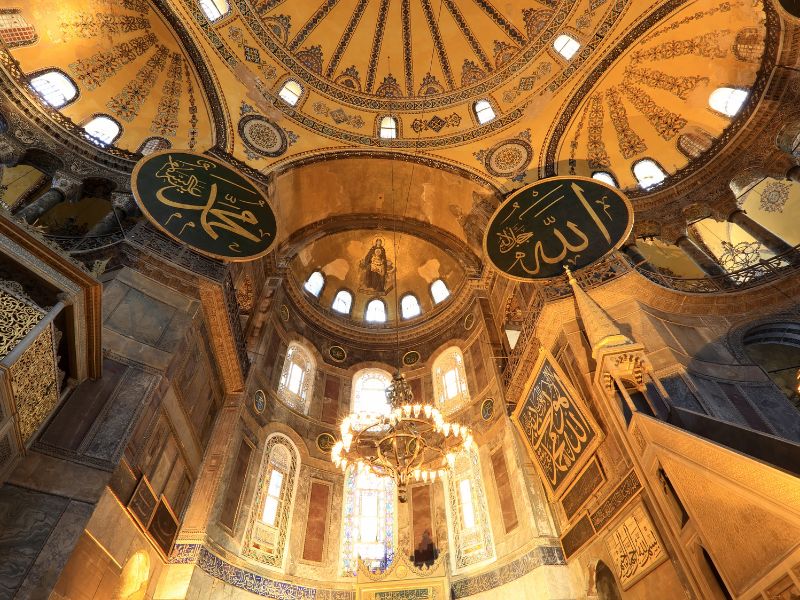
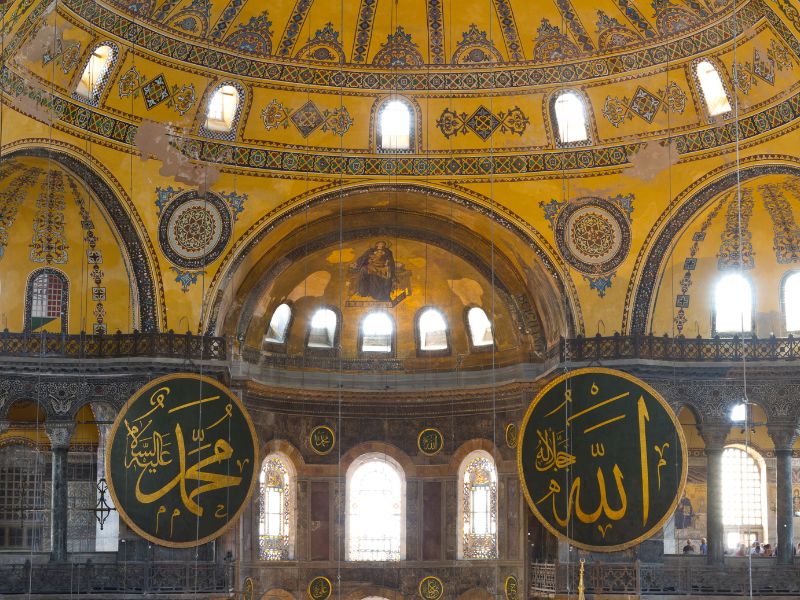
The decision to transform Hagia Sophia into a museum served multiple goals. It neutralized the building’s religious symbolism, promoting a vision of shared heritage rather than division. It allowed Islamic and Christian elements to coexist in plain view—Byzantine mosaics uncovered, Ottoman additions preserved—signaling that Turkey honored its entire past, not just one chapter.
Equally important was the international signal it sent. In a time when Turkey sought recognition from Western powers, Hagia Sophia as a museum showcased a modern, inclusive republic rather than an Islamic theocracy. The act also allowed conservation efforts to begin. Restorers removed plaster that had covered centuries-old Christian mosaics, revealing artistic treasures unseen for generations.
A National Shift Toward Secularism
For Turkey, the museum conversion marked a cultural pivot. Hagia Sophia, once an exclusive space for prayer, became a public domain. It became a site of learning, tourism, and shared heritage. This redefined how the Turkish people—and the world—understood the structure: not just as a place of faith, but as a symbol of civilization.
This decision was crucial in Atatürk’s broader reforms, which also included abolishing the caliphate, adopting the Latin alphabet, and implementing a secular legal code. Hagia Sophia as a museum became a metaphor for a state that was choosing modernity over tradition, civic unity over religious dominance.
The Global Legacy of the Museum Era
By 1985, Hagia Sophia was recognized as a UNESCO World Heritage Site, emphasizing its importance not only to Turkey but to all of humanity. As a museum, it welcomed millions of visitors of every faith and background, allowing them to encounter a unique blend of architectural genius, religious history, and cultural resilience. For many decades, it stood as a rare space where East met West—not in conflict, but in continuity.
A Reversal in 2020: The End of the Museum Chapter
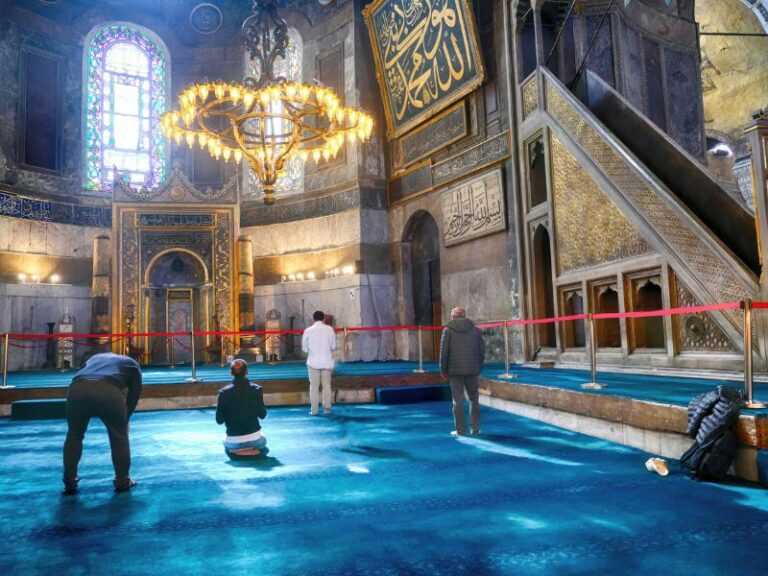
In 2020, the Turkish government reversed the decision made nearly a century earlier, reclassifying Hagia Sophia once again as a mosque. While the building remains open to visitors, the change reignited global debate. For supporters, the move reclaimed Ottoman heritage. For critics, it marked a retreat from secular ideals and a politicization of cultural heritage.
Nevertheless, the legacy of Hagia Sophia as a museum remains impactful. It was a powerful chapter in the monument’s long and complicated life—one that proved architecture can reflect the spirit of an entire nation.
Conclusion
The conversion of Hagia Sophia into a museum in 1935 was more than an act of preservation—it was a reimagining. In the heart of Istanbul, a space once dominated by theological power became a testament to unity, progress, and shared memory.
Hagia Sophia as a museum shaped the cultural identity of modern Turkey and offered the world a rare glimpse into how history, art, and politics can converge within a single monument. Though that era has closed, its influence endures—in every uncovered mosaic, in every visitor’s gaze, and in every conversation about what this extraordinary building truly represents.