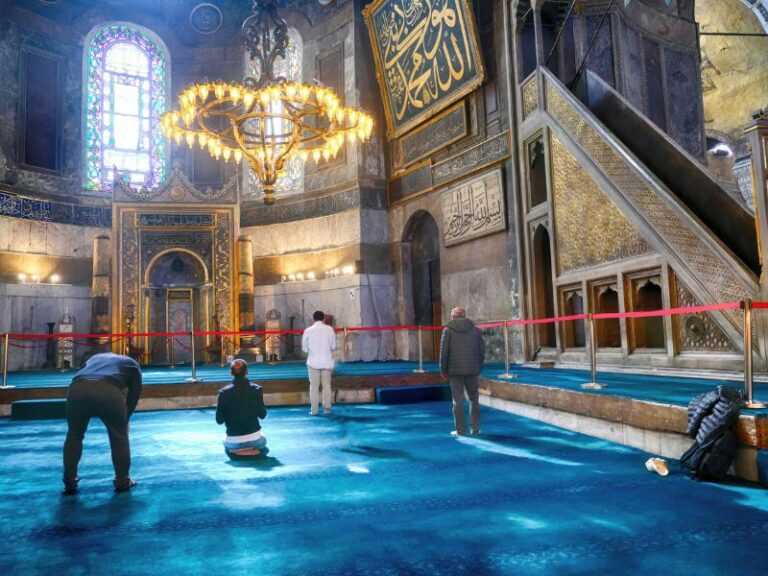
Introduction: The 1344 Earthquake – A Turning Point for Hagia Sophia
In the heart of Constantinople, a city where history whispered through every street and building, stood the magnificent Hagia Sophia. An architectural marvel of its time, Hagia Sophia was more than just a cathedral; it was a symbol of the Byzantine Empire’s grandeur and its deeply rooted Christian faith.
However, in 1344, a catastrophic event shook the very foundation of this iconic structure. An earthquake, massive in scale and destructive in force, struck Constantinople, leaving behind a trail of devastation with Hagia Sophia at its epicenter. This article delves into the impact of the 1344 earthquake on Hagia Sophia, exploring the extensive damages it suffered and the subsequent restoration efforts that marked a pivotal moment in Byzantine architectural history.
Hagia Sophia Before the Earthquake
Before the fateful day in 1344, Hagia Sophia stood as a beacon of Byzantine architectural excellence. Originally constructed under the guidance of Emperor Justinian in the 6th century, this cathedral had undergone several restorations due to previous earthquakes and riots.
Its massive dome, towering over the city’s skyline, was not just an architectural achievement but also a symbol of the divine. The cathedral’s interior, adorned with intricate mosaics and grand marbles, depicted scenes from Christian theology, resonating with the devout populace of Constantinople.
The Earthquake’s Wrath: Destruction Unleashed
The earthquake in 1344 was unlike any Constantinople had witnessed before. It struck with such ferocity that significant portions of the cathedral were reduced to rubble. The most devastating blow was to the eastern arch and a part of the grand dome, which collapsed, leaving a gaping void in the once unbroken skyline of the city.
This event did not just cause physical damage; it struck a blow to the spiritual heart of the Byzantine Empire. The populace, already grappling with political and economic challenges, saw this as a divine omen, further deepening the despair that had taken hold of the empire.
Assessing the Damage
In the aftermath of the earthquake, the full extent of the damage to Hagia Sophia began to unravel. The collapse of the eastern arch had compromised the structural integrity of the entire building. The walls, which had withstood centuries of turmoil, now showed signs of weakening, raising concerns about the cathedral’s future. The interior, once a visual hymn of Christian belief, lay in disarray, with debris obscuring the intricate mosaics and the grandeur of its past.
Restoration Efforts: A Challenge of Byzantine Proportions
The task of restoring Hagia Sophia was monumental. Emperor Andronicus II, who reigned during this period, took upon himself the responsibility of reviving this symbol of Byzantine pride. The restoration of Hagia Sophia was not just about repairing a building; it was about restoring faith in an empire beset by internal strife and external threats.
The emperor commissioned the best architects and artisans of the time, ensuring that the restoration work aligned with the original grandeur of the cathedral.
Engineering Marvels: Reinventing Hagia Sophia’s Structure
The architects faced a daunting challenge: to restore the cathedral while ensuring its resilience against future seismic events. The most significant addition was the construction of massive pyramidal tower-buttresses to support the weakened structure.
These buttresses, though necessary, changed the exterior aesthetic of Hagia Sophia, giving it a more fortified appearance. Inside, the dome and arches were reinforced, and the eastern arch, which had borne the brunt of the earthquake, was meticulously rebuilt.
Reviving the Spiritual Essence: Interior Restorations
The restoration also focused on reviving the spiritual essence of Hagia Sophia. The intricate mosaics, many of which had been damaged or obscured by debris, were carefully restored. New icons and religious artifacts were commissioned to replace those destroyed.
The interior was not just restored to its former state but was enhanced to reflect the evolving artistic trends of the period, blending traditional Byzantine artistry with contemporary influences.
Hagia Sophia’s Restoration: A Symbol of Resilience
The restoration of Hagia Sophia following the 1344 earthquake was a testament to the resilience of the Byzantine Empire. Despite facing numerous challenges, the empire managed to restore this architectural marvel, reaffirming its cultural and religious significance.
The restoration work on Hagia Sophia became a beacon of hope and a symbol of the enduring spirit of Constantinople, even as the empire itself faced an uncertain future.